
What Is Employee Development and Why Does It Matter?
Employee development is the ongoing process of helping employees build new skills, grow in their current role, and prepare for the next step in their careers. Companies that invest in their people see stronger employee engagement, better performance, and lower turnover. A good development program, however, needs more than online courses. It also needs a dedicated place where teams can step away from daily work and learn together.
For small businesses, startups, and hybrid teams, a clear development plan affects who stays, how they perform, and how ready they are to step into bigger roles. Discovering what employee development means, why it matters, and how to build a program that works for your team are essential steps to building a strong business.
What Is Employee Development?
Employee development is any effort a company makes to help its people grow their skills, knowledge, and careers. It includes formal training courses, mentorship programs, leadership development, stretch assignments, and on-the-job coaching. The goal is to help individual employees succeed in their current role while preparing them for future opportunities inside the company.
A good employee development program is planned and ongoing. It ties each person’s growth to the goals of the business, so both the employee and the company benefit.
Employee Development vs. Employee Training
Employee training focuses on the skills someone needs right now to do their job well, and development looks further ahead at career growth and long-term potential. Most strong companies include both.
- Employee training: Short-term, tied to specific tasks and often required (software onboarding, compliance, safety)
- Employee development: Long-term, tied to career goals and usually personalized (leadership skills, career advancement, cross-functional experience)
Common Types of Development Opportunities
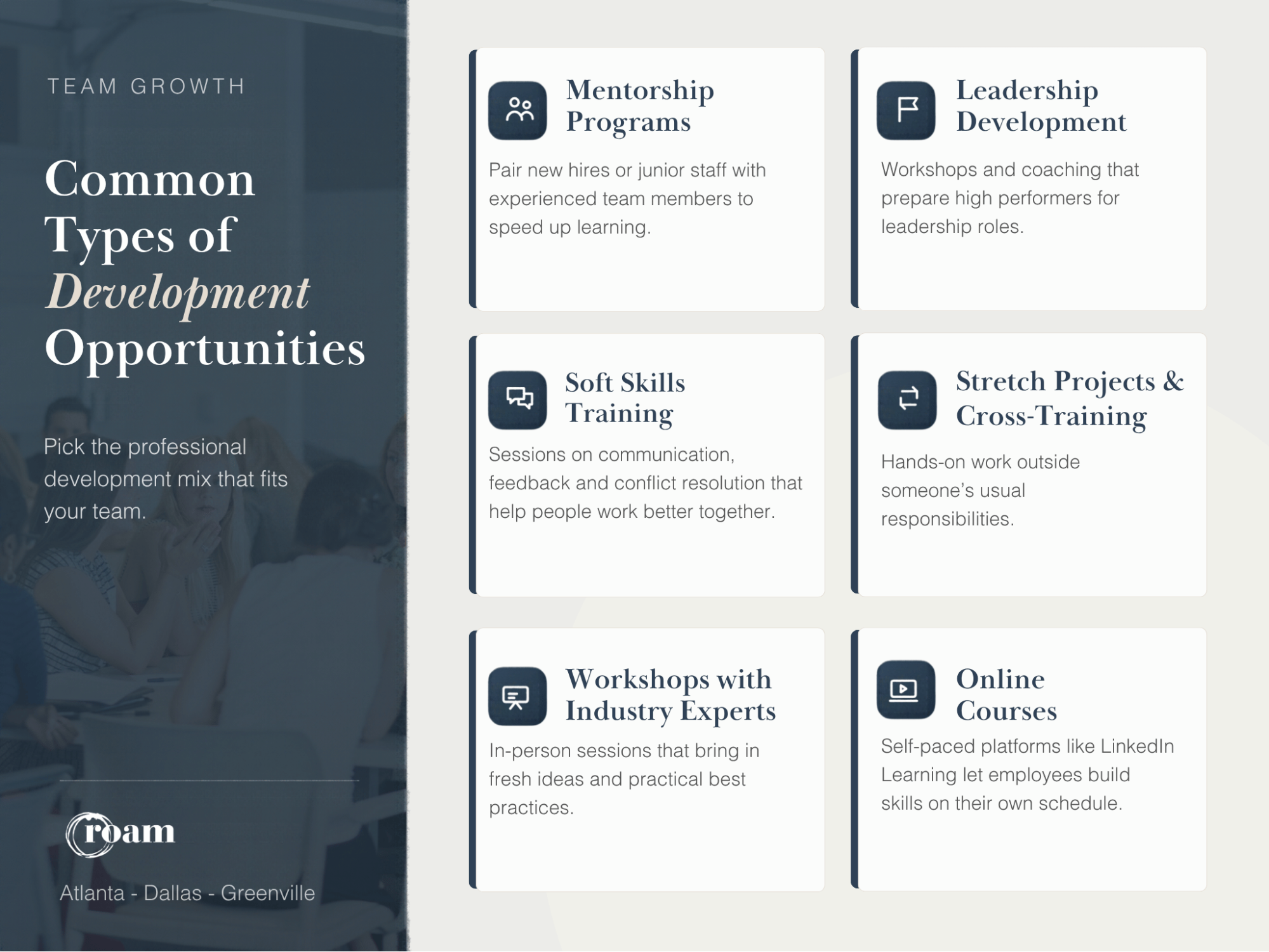
The right mix of professional development and opportunities depends on your team size, budget and goals.
- Mentorship programs: Pairing new hires or junior staff with experienced team members speeds up learning and builds relationships
- Leadership development: Workshops and coaching that prepare high performers for leadership roles
- Soft skills training: Sessions on communication skills, feedback, and conflict resolution that help people work better together
- Stretch projects and cross-training: Hands-on work outside someone’s usual responsibilities
- Workshops with industry experts: In-person sessions that bring in fresh ideas and practical best practices
- Online courses: Self-paced options through platforms like LinkedIn Learning let employees build valuable skills on their own schedule
Why Employee Development Matters
It Helps You Keep Top Talent
People want to work somewhere they can grow. When employees see a clear career path and real development opportunities, they are more likely to stay.
“Enterprises are always looking to recruit and retain top talent,” says Nathan Mozingo, Senior Director of Development at Roam.
That goal applies to companies of every size. Replacing an employee costs time and money, and a development program is one of the most direct ways to keep good people on your team.
It Improves Employee Performance
Employees who keep learning bring new skills back to their daily work. Better skills lead to better results, fewer mistakes, and more confidence in decision-making. Over time, consistent skill development helps build a high-performance workplace where people hold themselves to a higher standard.
It Builds Leaders Within Your Company
Promoting from within is often faster and less risky than hiring outside. Leadership development gives you a group of people who already know your business, your customers, and your culture. When a leadership role opens up, you have someone ready to step in.
It Raises Employee Engagement
Employees who feel invested in tend to be more engaged at work. Gallup’s State of the Global Workplace report tracks employee engagement worldwide and regularly connects it to how supported employees feel by their managers. Development is one of the clearest ways to show that support.
A strong program also helps with:
- Recruiting: Job seekers look for employers that offer career growth
- Onboarding: New hires get up to speed faster with structured training materials
- Culture: Shared learning experiences bring teams closer together
How to Build an Employee Development Program
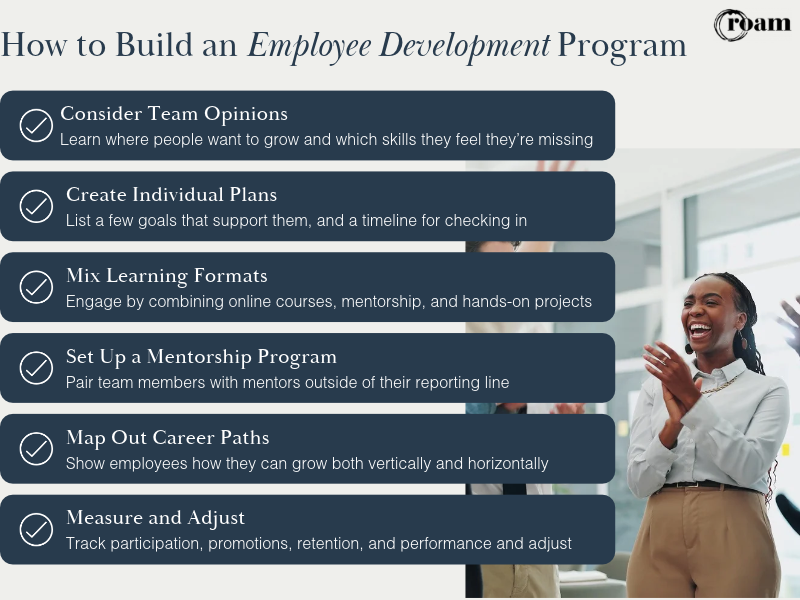
You don’t need a large HR department to get started. Treat development as a strategic initiative and build it one step at a time. If your company is still in its early stages, our business startup checklist can help you plan the other pieces too.
- Consider team opinions: Use one-on-ones and engagement surveys to learn where people want to grow and which skills they feel are missing.
- Create individual development plans: Each development plan should list a few goals, the training or experiences that support them, and a timeline for checking in.
- Mix learning formats: Combine online courses, live workshops, mentorship, and hands-on projects. People learn in different ways, and variety keeps them engaged.
- Set up a mentorship program: Pair team members with mentors outside their direct reporting line so they get a wider view of the business.
- Map out career paths: Show employees how they can grow. A career lattice approach works because it lets people move both vertically and horizontally within the company.
- Measure and adjust: Track participation, promotions, retention, and employee performance. Update the program as your business changes.
Best Practices to Keep in Mind
- Give employees designated time for learning during the workday
- Make managers responsible for coaching, with HR in a support role
- Tie development goals to real business needs
- Recognize progress when people finish training or take on new responsibilities
- Revisit each plan at least twice a year
Where Employee Development Happens Matters

For remote and hybrid teams, development comes with a logistics challenge. Online courses work well for individual learning, but leadership workshops, team training days, and mentorship sessions tend to work better in person.
“People tend to do their best work in spaces where they feel focused, energized, inspired, and engaged,” says Morgan Godbold, Senior Director of Marketing at Roam.
The same is true for learning. A quiet room with the right technology allows people to pay attention and participate. If your team works remotely most of the week, our guide to work-from-home essentials covers the setup side of staying productive.
How Roam Supports Training and Development
Roam gives growing teams a professional place to learn, meet, and work across Metro Atlanta, Dallas, and Greenville.
- Meeting spaces: Rooms for training sessions, workshops, and leadership retreats with complimentary A/V, fast Wi-Fi, and no food and beverage minimums
- A dedicated Experience Manager: Someone who handles setup, catering, and logistics so your team can focus on the content
- Coworking memberships: A home base for remote and hybrid employees to do focused work or join virtual training
- Private offices: Month-to-month flexibility for teams that are growing
- Multiple locations: Options so dispersed teams can meet closer to where people live
Grow Your Team at Roam
Roam is a flexible workspace provider with locations across Metro Atlanta, Dallas-Fort Worth, and Greenville, SC. Members and guests get professional meeting rooms, coworking space, and private offices backed by a hospitality-focused team on site.
Planning a training day, a leadership offsite, or a quiet place for your team to take virtual courses? Roam has a space for it. Book a meeting space or schedule a tour at a location near you today.
Frequently Asked Questions
The terms overlap. Employee development usually refers to programs a company runs for its staff, while professional development can also include growth an individual pursues on their own, like certifications or industry conferences. Both focus on building skills for career growth.
A development plan should include a few clear goals, the training or experiences that support each goal, a timeline, and regular check-ins with a manager. The best plans connect the employee’s career goals to the needs of the business.
Remote teams can use online courses and virtual mentorship for individual learning, then bring people together in person for workshops and leadership training. A flexible meeting space like Roam gives dispersed teams a professional place to gather without a long-term lease.
Small businesses depend on every team member. Development helps them keep top talent, prepare employees for bigger roles as the company grows, and compete with larger employers for new hires.
Yes. Roam’s meeting spaces work well for training sessions, workshops, and leadership retreats. Every booking includes complimentary A/V, fast Wi-Fi, and a dedicated Experience Manager, with no food and beverage minimums.