
How to Write a Mission Statement for Your Business
The Short Answer: A mission statement says why your business exists, who you serve, and the value you deliver. The best ones are short, specific, and tied to your core values. Write it in plain language, keep it to a sentence or two, and let it guide real decisions. A mission statement is not wall art. It is a working tool that shapes how your team shows up every day.
Every business starts with an idea. Turning that idea into something other people understand takes a clear sense of purpose, and that is the job of a mission statement. It puts your reason for existing into words your team, customers, and future hires can rally behind.
If you are launching a company or updating one you have run for years, a few focused sentences can sharpen your strategic planning and steady your decision-making.
What Is a Mission Statement?
A mission statement is a short declaration of what your business does, who it serves, and why that work matters. It answers a plain question: why do we exist beyond making money?
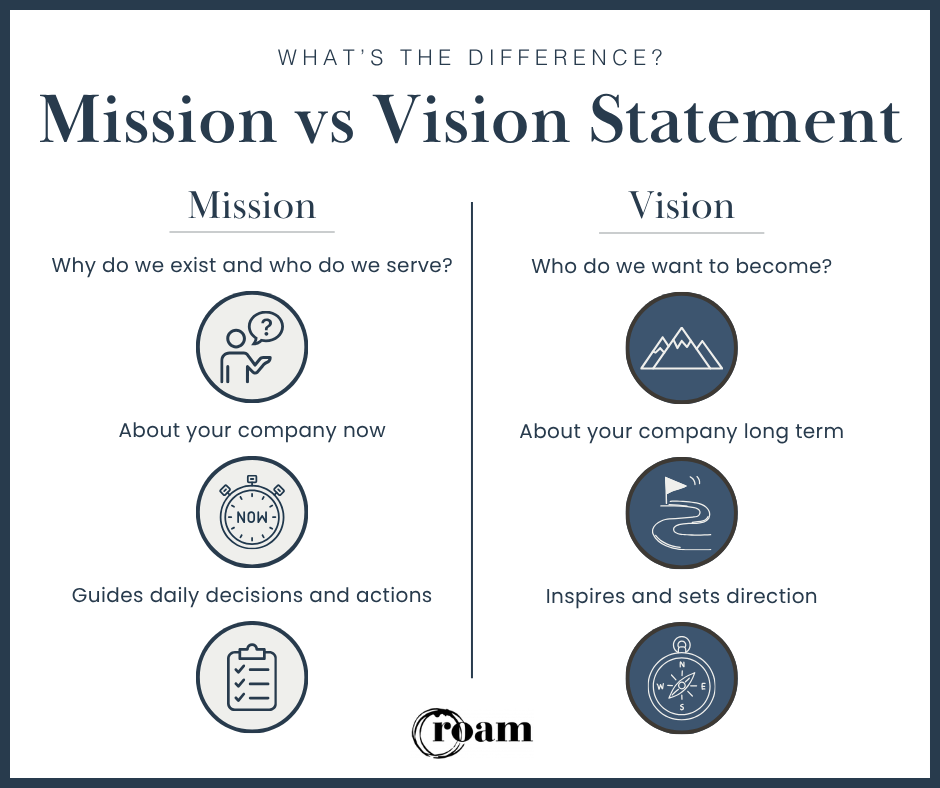
People often mix it up with a vision statement, but they do two different jobs:
- A mission statement describes your purpose today, what you do, and why it matters right now.
- A vision statement describes the future you are working toward over the long term.
Your business needs both. Your mission keeps the team grounded in daily work, and your vision gives everyone something larger to aim for. Paired with your core values, they form the backbone of your brand and guide nearly every choice you make.
Why Your Mission Statement Matters
A mission statement is more than just a marketing line. Written well, it shapes how your company operates in a few key ways:
- It guides decision-making: When a tough call comes up, having a clear core mission points you toward the path that fits your purpose.
- It shapes hiring and culture: A stated mission gives your human resources team a reference point for finding people who share your values and building a stronger office culture over time.
- It builds trust: Customers and partners want to know what you stand for. A clear, unwavering commitment to your principles tells them who you are and why you exist.
- It keeps you focused: The more your business grows, the more distractions creep in, and your mission keeps you anchored to what actually matters.
The best companies treat their mission as a living document, folding it into their continuous improvement. These companies tend to make sharper, more consistent choices than those that file it away after launch.
How to Write a Strong Mission Statement
You don’t need a consultant or a weekend retreat to write a good mission statement. Work through these steps with honest critical thinking, and you can have a solid draft by the end of the day.
- Define what you do: Write one plain sentence about your product or service. If a stranger could not picture your business from it, simplify it.
- Name who you serve: Identify your target customer clearly. A mission that speaks to everyone speaks to no one.
- Clarify the value you deliver: Ask what changes for your customer because you exist. Do you save them time, money, or stress, or leave them in a better place than you found them? That is the heart of your statement.
- Anchor it in your core values: List three to five beliefs that drive how you operate, then let them shape the language. One shared core value can have more impact than a page of rules.
- Cut it down: The best mission statements are short enough to remember. Aim for one or two sentences. If your team could not recite it, it is too long.
- Test it against reality: Read it aloud. Does it match how you actually work? The words should describe what you already do, not what you hope to do someday.
- Revisit it as you grow: The business you run after five years is rarely the same as the one you launched. Sometimes that means writing a new mission statement, but more often it is just redeveloping the one you already have.
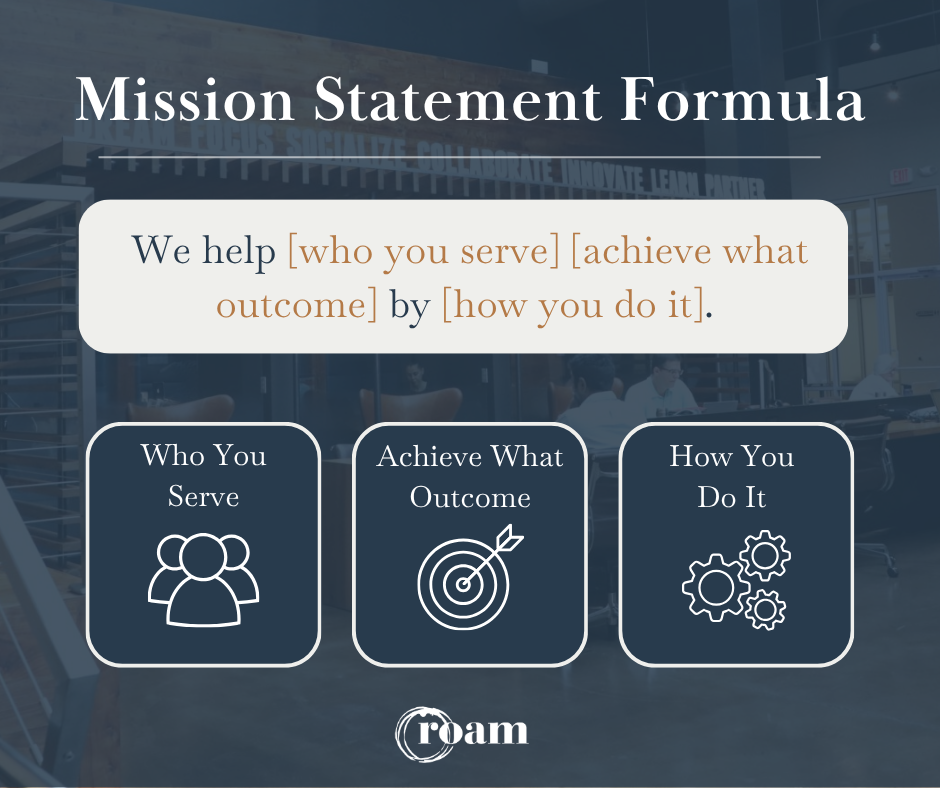
A Simple Formula to Start From
If a blank page is slowing you down, use this formula and fill in the blanks honestly. It gives you the bones of a statement you can shape from there:
What the Best Mission Statements Have in Common
Compare mission statement examples from different industries, and the strongest ones have a few things in common:
- They are specific. Vague language about excellence and passion could belong to any company. Detail is what makes a mission memorable.
- They are honest. A statement only works if the business behind it backs it up with action.
- They are human. Plain words beat corporate filler. Write the way you would explain your work to a friend over coffee.
- They are short. A mission you can say in one breath is a mission people will actually repeat.
Hold your draft against that list and keep cutting until your true voice comes through. A strong mission statement sounds like a person talking, not a committee.
Bringing Your Mission to Life

Writing the statement is the start. The harder part is living it, which shows up in how and where you work.
The teams that pull this off treat their mission as a daily practice, not a poster in the lobby, and their leaders take an active role in modeling it. They make sure their space, their service, and their people all reflect what they say they stand for. That consistency is what builds real trust over time.
Living your mission comes down to intentionality, making sure the small, daily choices reflect what you say you stand for.
Josh Kelly, Hospitality Operations Manager at Roam, puts it this way:
“Everything we do is intentional. We carefully consider the entire experience, from functionality to aesthetics. We obsess over the details to ensure members and guests feel cared for throughout their time with us.”
Your environment plays a bigger part than most founders expect. A focused, professional setting makes it easier for a team to do work that aligns with its purpose, while a distracting space can work against that purpose. That is one reason many owners choose a traditional meeting space or private office, built for the kind of work their mission is meant to represent.
Put Your Mission Somewhere It Can Grow
A mission statement gives your business a foundation. It guides your strategic planning, sharpens your decision-making, and tells the world what you are here to do. Write it with care, keep it short, and let it shape the way you work with real choices.
Where you do that work matters. Roam gives business owners, startups, and remote teams flexible workspaces designed with the same intentionality you want in your own brand. With coworking memberships, professional meeting rooms, and private offices across Atlanta, Dallas, and Greenville, you get a hospitality-first place to start, grow, and scale a business without a long-term lease.
Ready to build your company somewhere that reflects your mission? Explore Roam and book a tour today.
Frequently Asked Questions
A mission statement describes what your business does and why it matters right now. A vision statement describes the future you want to create. Most companies use both: the mission for daily focus, the vision for long-term direction.
Short. One or two sentences is the sweet spot. The best mission statements are easy to remember and easy to repeat, so resist the urge to pack in every value you hold.
Review it whenever your business changes direction in a meaningful way, such as entering a new market, serving a new audience, or shifting your services. Otherwise, revisit it about once a year to confirm it is still accurate.
Yes. Startups benefit most from a clear mission because it guides early decision-making and helps attract the right customers, partners, and hires. You do not need to be a large company to have a core mission.
It can. Your environment shapes how your team works and how clients experience your brand. A professional, intentional space helps your daily operations reflect the values your mission describes, which is where a hospitality-first space like Roam supports the mission your work represents.