
How Many Work Days Are In A Year? Make The Most Of Them At Roam
The Short Answer: There are approximately 260 workdays in a calendar year in the United States, though the exact number variesbased on weekends, public holidays, and whether it’s a leap year. For the average full-time employee on a standard workweek, that adds up to around 2,080 work hours annually. That is a significant amount of time. The real question is whether you’re spending it somewhere that actually brings out your best work.
The Actual Number of Work Days in a Year
Let’s get specific. A standard calendar year contains 365 days, or 366 in a leap year. Strip out the weekend days, and you’re left with roughly 261 weekdays. From there, federal holidays come off the top.
In the United States, there are 11 federally recognized public holidays:
- New Year’s Day
- Martin Luther King Jr. Day
- Presidents’ Day
- Memorial Day
- Juneteenth National Independence Day
- Independence Day
- Labor Day
- Indigenous Peoples’ Day
- Veterans Day
- Thanksgiving Day
- Christmas Day
Subtract those from your weekday total, and the average person on a standard workweek ends up with approximately 250 business days per year, or around 2,000 working hours.
But that total number is rarely the actual number.
What Adjusts the Count
Several variables shift the exact number of working days in any given year:
- Vacation days: Full-time employees in the United States average roughly 10 paid vacation days per year, though that figure climbs with tenure and varies widely by company.
- Sick leave and sick days: Many employers offer between 5 and 10 sick days annually. A growing number of states now mandate minimum sick leave as part of state-specific policies.
- State-specific holidays: Beyond federal holidays, certain states observe additional bank holidays that affect payroll calendars and pay periods.
- Personal leave: Bereavement, jury duty, and other personal time categories also reduce the total count.
- Part-time workers: If you’re not logging a full 40-hour week, your total days and working hours will look very different from those of a full-time employee.
For businesses managing project timelines, running payroll, or handling workforce management, having an accurate picture of business days in a fiscal year isn’t just academic. It affects overtime pay calculations, pay period accuracy, and scheduling across the board.
A Quick Note on Leap Years
In a leap year, there’s one extra day on the calendar, which typically adds one more working day depending on what day of the week it falls on. That extra day can shift totals in ways that matter for hourly rate calculations and project timelines.
250 Days. What Are You Getting Out of Them?
The total count is one thing. How those days actually feel is another.
A growing number of remote and hybrid professionals are realizing their work-life balance struggles aren’t just about hours. They’re about environment. When your home doubles as your office, the boundaries between personal time and work time collapse. Focus suffers. Energy fades. And eventually, even a manageable work schedule starts to feel like a grind.
The fix isn’t always about doing more. Sometimes it’s about where you’re doing it.
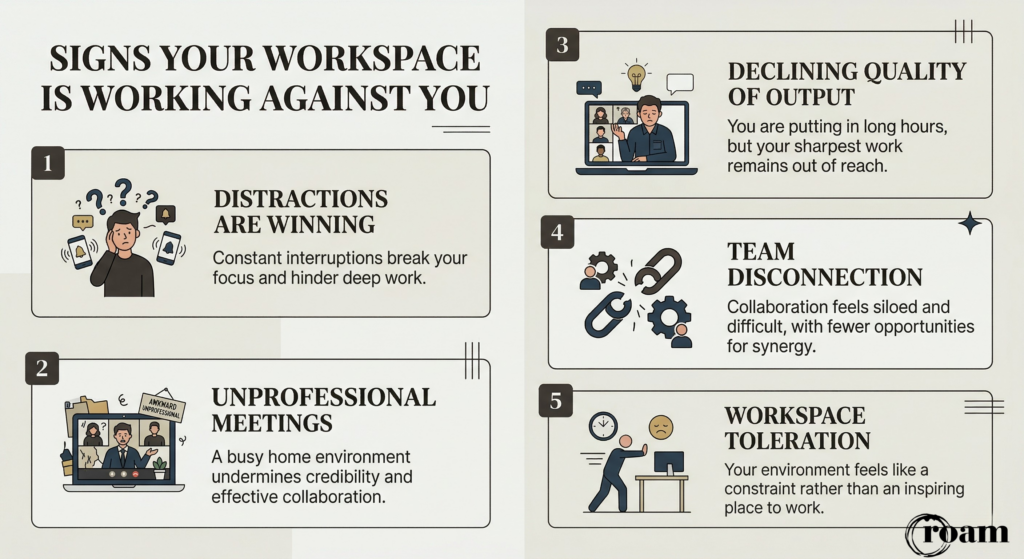
Signs Your Workspace Is Working Against You
- Distractions are winning more often than focus is
- Meetings feel harder to run and less professional from home
- You’re putting in the hours but not producing your sharpest work
- Collaboration with your team feels disconnected
- Your desk has started to feel like a place you tolerate instead of a place you want to be
These aren’t signs you need a new job or a new schedule. There are often signs you need a better space.
Practical Ways to Make the Most of Your Work Days
You don’t need to rebuild your entire routine to get more out of your working days. A few focused shifts go a long way.
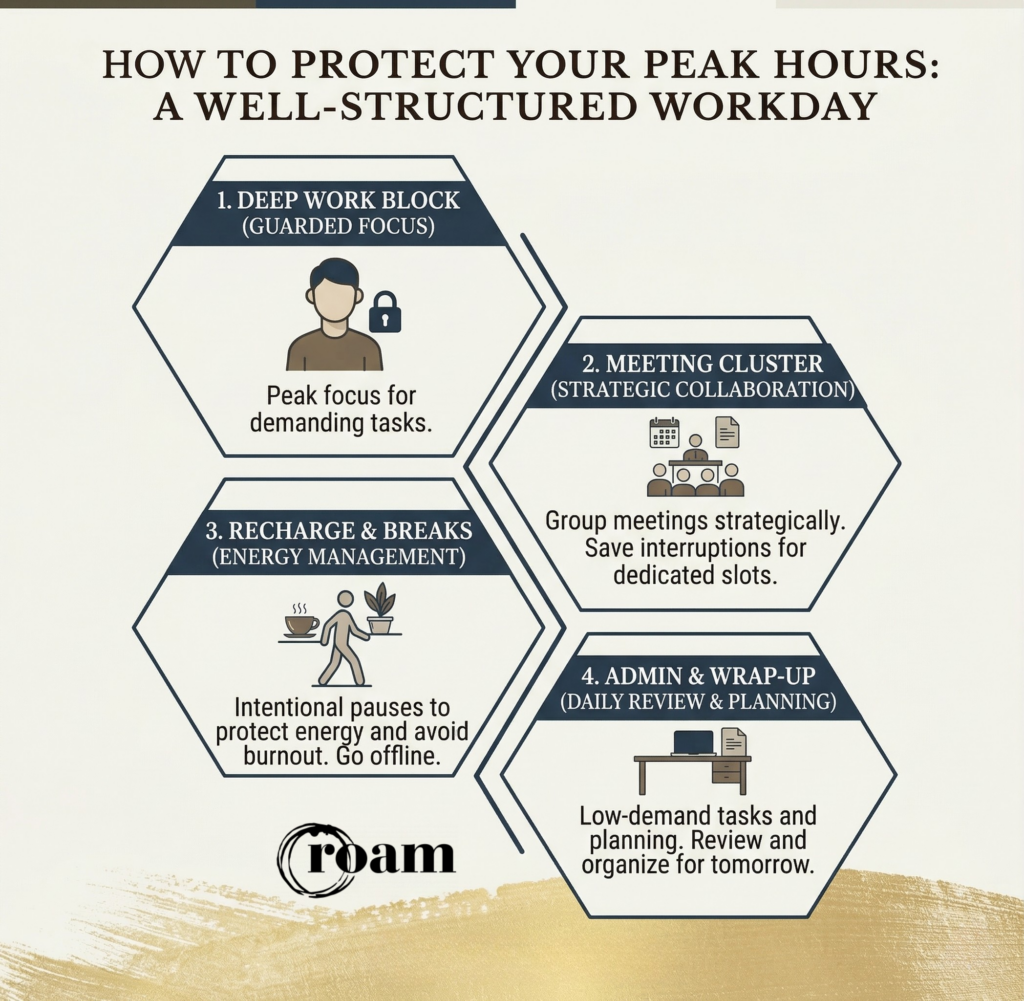
1. Guard Your Peak Hours
Identify when you do your best thinking and block that time for your most demanding work. Treat it like a meeting you can’t cancel. Whether you’re at home or in a coworking space, protecting deep work time is one of the simplest ways to raise the quality of your output without logging more hours.
2. Cluster Meetings Strategically
Grouping meetings into dedicated days and keeping other days meeting-free gives you longer stretches of uninterrupted time. It also makes a difference to run those meetings from a professional setting, especially for client conversations or team strategy sessions where credibility matters.
3. Actually Use Your Vacation Days
The average person in the United States leaves a surprising number of paid vacation days on the table each year. That long weekend you keep postponing? Take it. Time away from work isn’t a loss. It’s what protects your energy and focus across the other 250 days. Work-life balance is not just a talking point. It’s a performance lever.
4. Change Your Environment When You Hit a Wall
One of the most overlooked productivity moves is a simple change of scenery. If you’ve been working from home for weeks and your motivation has flatlined, heading somewhere intentionally designed for work can reset your entire day.
Make Your Work Days Better at Roam
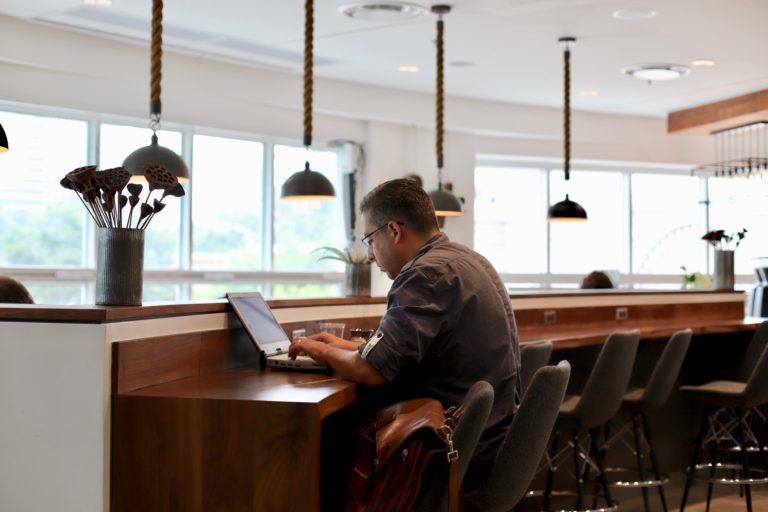
Roam was built for exactly the kind of professional who wants flexibility without sacrificing the feel of a real, purposeful workspace. The brand sits squarely between the limitations of a home office and the rigidity of a traditional corporate lease.
With locations across Metro Atlanta, Dallas-Fort Worth, and Greenville, Roam gives remote workers, entrepreneurs, and distributed teams a place to show up and actually do their best work. The spaces are thoughtfully designed, professionally equipped, and backed by a hospitality-first approach that takes the friction out of your day before it starts.
What Roam Brings to Your Work Day
- Professional meeting rooms with complimentary A/V equipment and no food and beverage minimums
- A dedicated personal meeting coordinator to handle logistics while you focus on the work
- Month-to-month coworking memberships built for flexibility, not lock-in
- Private offices for teams that need a consistent, professional home base
- Spaces across Atlanta, Dallas, and Greenville, positioned in the areas where business gets done
- A welcoming option for business travelers visiting Atlanta, Dallas, or Greenville; whether you need a professional space for a day, a meeting room for a client presentation, or a quiet place to work between appointments
Roam’s model is simple: give working professionals and growing businesses the space to show up confidently, collaborate meaningfully, and scale without the weight of a traditional office commitment. Roam is also a natural fit for business travelers passing through Atlanta, Dallas, or Greenville who need a professional space for the day without the hassle of hunting down a hotel conference room. Hospitality meets functionality, and the result is a workday that actually feels worth having.
If you’ve been counting down the hours instead of making the most of them, the environment you’re in is worth looking at.
Find your Roam location and explore membership options today!