
Sole Proprietorship vs LLC: What Each Business Structure Means for Your Workspace, Address, and Daily Operations
The Short Answer: Choosing between a sole proprietorship vs LLC comes down to two things: how much personal liability you are willing to carry, and how you want your business income taxed. A sole proprietorship is the simplest, cheapest way to start. An LLC adds a legal separation that protects your personal assets. But there is a third question most guides skip: once you pick a structure, where do you actually work, where does your mail go, and where do you meet clients? That’s where Roam comes in- the right workspace makes all the difference for your business.
Your Business Structure Decides More Than You Think
Most people compare a sole proprietorship vs LLC to answer a tax or liability question. Then they sign the paperwork and run into a quieter set of problems. The address on your formation documents, the place clients see when they look you up, the spot where you take a Tuesday call: your business structure shapes all of it.
Here is the quick version. A sole proprietorship is the default unincorporated business you become the moment you start working for yourself. A limited liability company, or LLC, is a separate legal entity you register with the state. Both are popular with small business owners, and both carry real trade-offs.
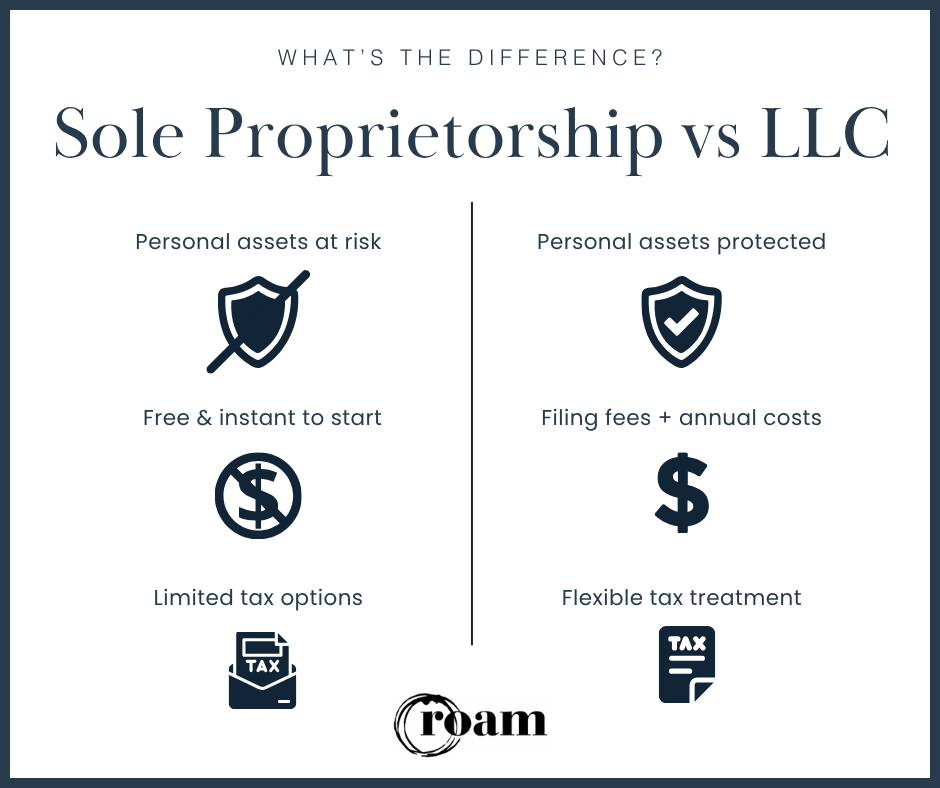
Sole Proprietorship vs LLC: What Each Structure Actually Is
A sole proprietorship is an unincorporated business with one owner. There is no legal separation between you and the company. For tax purposes and legal purposes, you and the business are the same. If you freelance, consult, or sell without registering anything, you are already a sole proprietor.
A limited liability company is a separate legal entity created under state law, owned by one or more members. That separate entity status is the main difference between the two. A sole proprietorship is not a separate entity. An LLC is.
Liability Protection and Your Personal Assets
This is the practical heart of the sole proprietorship vs LLC decision.
As a sole proprietor, you carry unlimited liability. The company’s debts are your debts. If the business owes money or gets sued, creditors can reach your personal assets: your savings, sometimes your home, and your personal finances in general. There is no wall between business assets and personal ones, and that unlimited liability is the main risk of being a sole proprietor.
An LLC builds that wall. The legal separation between you and the business means an LLC’s debts generally stay with the company, not the owner. That liability protection is the reason many owners form one. The company carries its own business debt as a separate entity, and your personal liability shrinks.
A caveat: this protection is not absolute. Mixing personal and business money, signing personal guarantees, or acting carelessly can let courts “pierce the veil.” Part of keeping that separation clean is keeping the business visibly distinct, including a business address that is not your kitchen table.
Taxes and Daily Money Management
Good news for both structures: they are pass-through entities by default. Business income flows straight to your personal income and gets reported on your individual return, usually on Schedule C. There is no double taxation, the situation a traditional C corporation faces when profits are taxed once at the company level and again as dividends.
Both owners also owe self-employment tax, which covers Social Security and Medicare on net earnings. Income tax applies on top of that, based on your personal income bracket.
The difference shows up in flexibility. An LLC can elect to be taxed as an S corp or a C corp later, which can change how self-employment tax and payroll taxes work as profits grow. A sole proprietorship cannot make those elections, so it stays a pass-through entity for good. For most new owners, the everyday filing feels similar, but the LLC keeps doors open. The IRS overview of LLC tax options lays out the choices.
Setup, Paperwork, and Ongoing Requirements
The two structures sit at opposite ends of the effort scale.
A sole proprietorship needs almost nothing to start:
- No formation documents in most states
- The lowest cost of any business structure
- An optional DBA (“doing business as”) filing if you want a name other than your own
A limited liability company asks for more:
- File articles of organization with your state
- Name a registered agent to receive legal and state mail
- Draft an operating agreement that sets ownership and rules
- Pay state filing costs and any additional fees
LLCs also carry ongoing upkeep, like annual reports and the steady discipline of keeping business and personal finances apart. One more detail: an LLC lists a real business address on public formation records. That address becomes searchable, which leads straight to the question every new owner eventually asks. (This is general information, not legal advice, so confirm the specifics for your state.)

Where You Work, Receive Mail, and Meet Clients
Structure settled. Now the operational questions start, and this is where office virtualization comes in. Office virtualization is the shift away from a fixed, leased headquarters toward a setup where your address, meetings, mail, and workspace are provisioned on demand. You assemble the office you need instead of signing a decade-long lease for one. Roam is the infrastructure layer that makes a virtualized office functional.
Many sole proprietors default to a home address. It works until it doesn’t. Your home shows up on marketing, on formation documents, and on client invoices. It blurs the line between personal and business, and it rarely makes the impression a business owner wants. LLC owners filing public records, and any owner who values credibility, gain from a professional business address kept separate from home.
That address pairs naturally with where you actually do the work:
- Virtual offices with a professional business address and mail handling, so your home stays private. See virtual office options.
- Coworking memberships and Day Passes for focused daily work away from kitchen-table distractions. Explore memberships.
- Private offices and dedicated desks as your team grows. Learn more about office space.
- Meeting and conference space for client-facing sessions that need to look the part. Book meeting space.
As Halston Arterburn, Senior Community Manager at Roam, puts it:
“Our goal is to eliminate the worry and stress of maintaining an office space on your own. Your membership comes with many team members who are here to support your work.”
Choosing a Structure and a Place to Run It
A sole proprietorship is simpler and cheaper, but it offers no separation between you and the business. An LLC adds liability protection, tax flexibility, and legal protection for your personal assets in exchange for a bit more paperwork and cost. Your call depends on how much risk you carry and how much structure you want.
Just remember the part most sole proprietorship vs LLC comparison articles leave out. Your business structure decides liability and taxes, but you still have to decide where the business lives day to day. A professional address, a quiet place to work, and a polished room to meet clients turn a legal status into a real, working business.
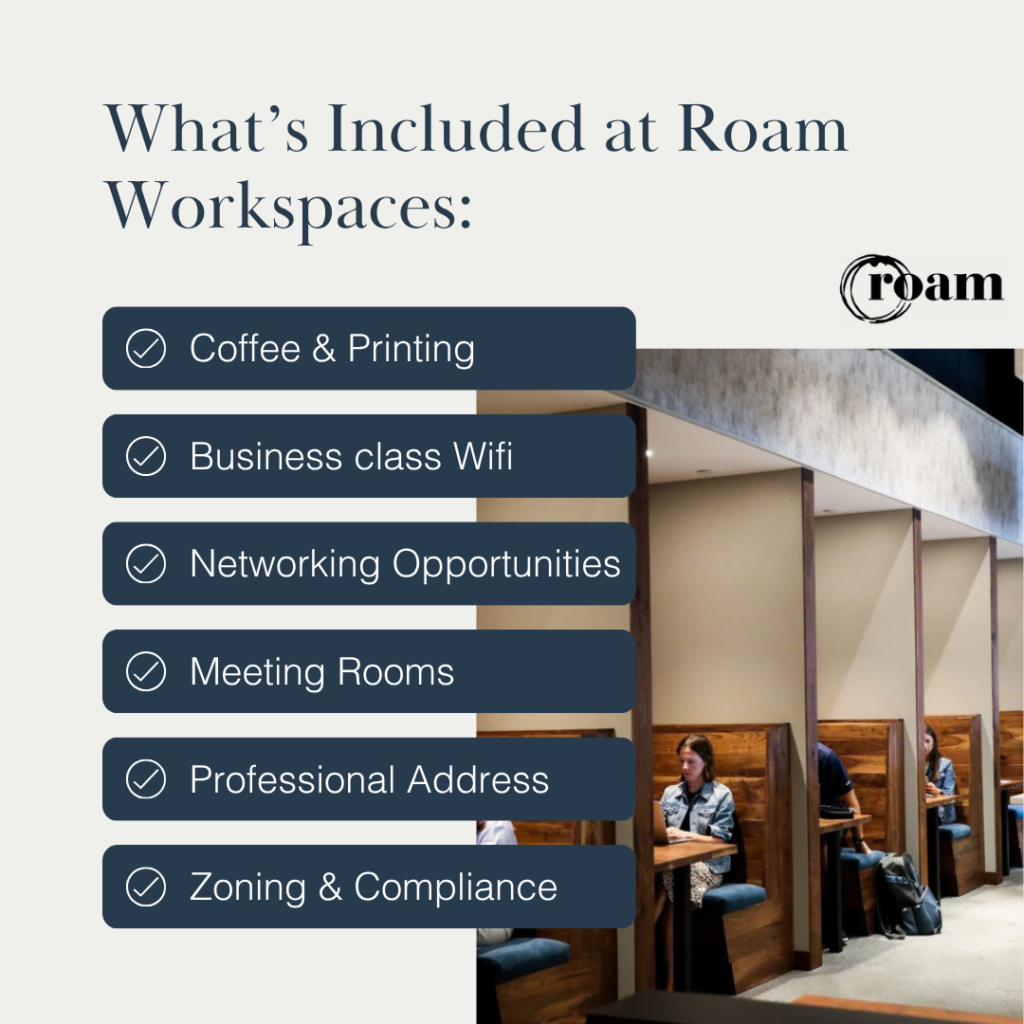
Roam is a flexible workspace provider offering coworking memberships, private offices, meeting rooms, and virtual office services across Atlanta, Georgia, Dallas, Texas, and Greenville, SC. For a brand-new sole proprietor or LLC, that means you can establish a professional business address without putting your home address on public record, claim a desk only when you need one with month-to-month memberships, and book a polished room whenever it is time to meet a client in person. Whether you stay a team of one or grow into something bigger, Roam’s flexible terms let your workspace expand on your timeline instead of locking you into more than your business is ready for.
Ready to give your new business a home? Explore Roam’s virtual offices, coworking memberships, and meeting spaces, and find a professional address and workspace that grows with you. Find a Roam location near you.
Frequently Asked Questions
It depends on risk and goals. A sole proprietorship suits low-risk, low-cost startups with simple taxes. A limited liability company suits owners who want liability protection for personal assets and reduced personal liability, plus the option of S corp or C corp tax treatment later. Many owners start as a sole proprietor and form an LLC as income and risk grow.
Neither legally requires one, but both benefit from it. An LLC lists a business address on public records, and any owner who wants privacy and credibility gains from a professional address instead of a home address. A Roam virtual office provides that address plus mail handling.
By default, both are pass-through entities, so business income lands on your personal return and owes self-employment tax. Both also avoid the double taxation that a C corporation faces. The difference is flexibility: an LLC can elect S corp or C corp status later, while a sole proprietorship cannot.
Yes. Many small business owners use a coworking membership for daily work and a virtual office for their registered business address. Roam offers both, along with meeting rooms for client sessions, across its locations in Georgia, Texas, and South Carolina.
No. A registered agent is required for an LLC to receive legal and state mail, not for a sole proprietorship. This is general information, so check your state’s rules or ask a professional for legal advice.