
Why Flexible Options Are Changing How People Rent Business Space
The Short Answer: Flexible workspace options like coworking memberships and short-term office rentals are replacing traditional commercial leases for many businesses. Instead of locking into multi-year commitments with unpredictable costs, companies now have access to professional space on month-to-month terms. This shift gives business owners the freedom to scale up or down based on actual needs rather than lease obligations.
The way companies think about office space has shifted dramatically over the past several years. What once seemed like a straightforward business decision (sign a lease, move in, stay for five to ten years) now feels outdated for many organizations as more flexible options are now available.
Small business owners, entrepreneurs, and even established companies are questioning whether long-term commercial leases make sense for their operations. The answer, increasingly, is that flexibility matters more than square footage commitments.
The Hidden Costs of Traditional Commercial Leases
Before signing a lease agreement for commercial space, most business owners focus on the base rent. That number feels concrete and plannable. But anyone who has navigated commercial real estate knows that base rent tells only part of the story.
Traditional commercial property agreements often include additional expenses that add up quickly:
- Common area maintenance (CAM) fees for shared spaces like lobbies, parking lots, and restrooms
- Property tax passed through to tenants
- Commercial property insurance requirements
- Maintenance fees for building upkeep and repairs
- Utility costs that fluctuate seasonally
The structure of these costs varies depending on the lease type. A triple net lease (sometimes called an NNN lease) requires tenants to pay property taxes, insurance, and maintenance on top of base rent. A modified gross lease bundles some of these costs together but still leaves room for unexpected expenses. Either way, the fine print in a commercial lease often reveals costs that weren’t part of the original calculation.
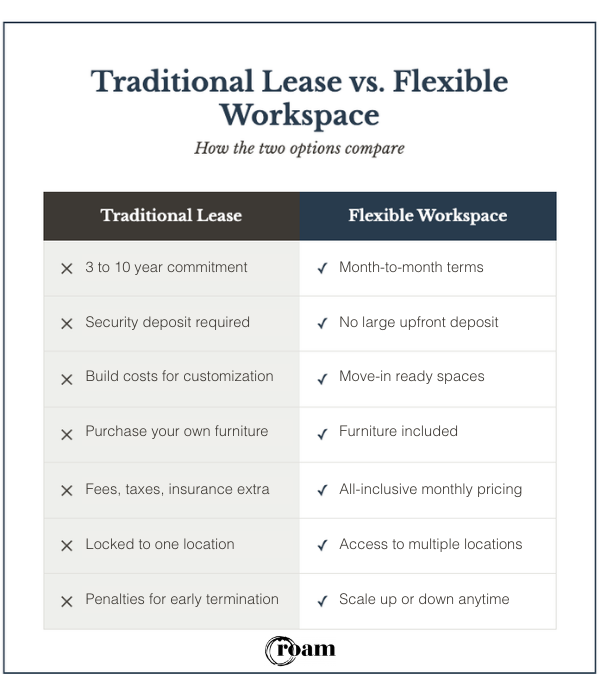
For a small business trying to manage cash flow carefully, these variable expenses create budgeting challenges. And that’s before factoring in the upfront costs: security deposits, build-out expenses for the new space, furniture, equipment, and technology infrastructure.
Why Long-Term Commitments No Longer Fit
Beyond the financial complexity, traditional lease structures assume something that many businesses can no longer guarantee: stability.
A five-year lease agreement made sense when companies could reasonably predict their space needs for that entire period. But business operations change. Teams grow and shrink. Remote work policies evolve. A rental space that feels perfect today might be half-empty (or overcrowded) in eighteen months.
The typical commercial lease offers little flexibility to address these changes. Breaking a lease early often means paying penalties or forfeiting deposits. Subleasing requires landlord approval and comes with its own complications. Many business owners find themselves paying for square footage they no longer need simply because the rental contract requires it.
This mismatch between lease terms and business reality has pushed many organizations to explore alternatives.
The Rise of Flexible Workspace Solutions
Flexible workspace options have emerged as a direct response to these pain points. Rather than committing to a commercial building for years at a time, businesses can now access professional office space on terms that match how they actually operate.
These alternatives take several forms:
- Coworking memberships that provide access to shared workspace, meeting rooms, and professional amenities without any long-term commitment
- Private offices available on month-to-month terms, fully furnished and move-in ready
- Dedicated desks for individuals who want a consistent workspace without leasing an entire office
- Meeting room rentals for teams that work remotely but need professional space for client presentations, interviews, or collaborative sessions
The appeal goes beyond just shorter commitment periods. Flexible workspace providers typically bundle costs that would be separate line items in a traditional lease. Internet, utilities, furniture, coffee, printing, and common areas are often included in a single monthly fee. This makes the actual business expense predictable and eliminates the surprise invoices that come with conventional commercial space.
Making an Informed Decision About Your Space Needs
Choosing between a traditional lease and flexible workspace requires an honest assessment of how your business actually operates. Consider these questions:
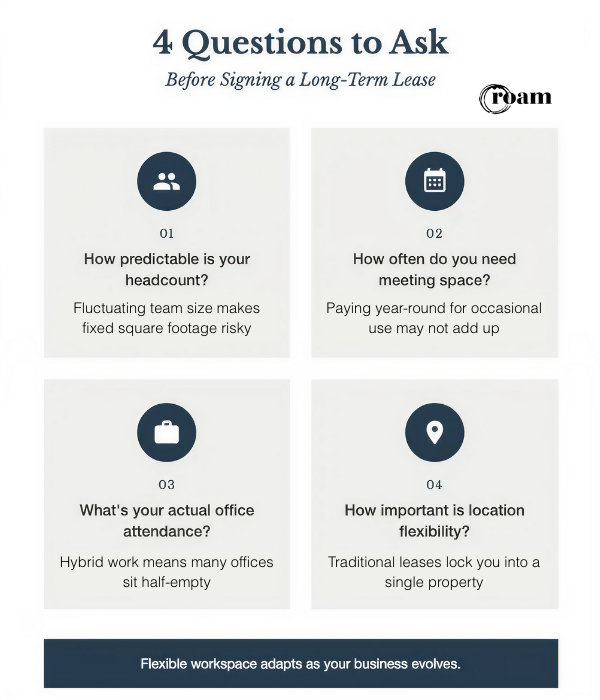
How predictable is your headcount? If your team size fluctuates based on projects, seasons, or growth phases, locking into fixed square footage creates risk. Flexible options let you add team members to your membership or reduce your footprint without penalty.
How often do you need meeting space? Many businesses maintain large offices primarily to have conference rooms available for occasional client meetings or team gatherings. If that describes your situation, renting meeting rooms as needed might make more sense than paying for dedicated space year-round.
What’s your actual in-office attendance? Hybrid work policies mean many companies have offices that sit partially empty most days. Paying commercial rent for space that’s only used at 40% capacity is a business expense worth reconsidering.
How important is location flexibility? Traditional leases tie you to a single commercial property. Coworking memberships often include access to multiple locations, giving team members the ability to work from whichever space is most convenient on any given day.
What Flexible Workspace Actually Looks Like
For business owners unfamiliar with modern coworking and flexible office options, the experience has evolved significantly from early iterations. Today’s professional flexible workspaces offer amenities that match or exceed what you’d find in a traditional commercial building.
At Roam, for example, members gain access to:
- Intentionally designed workspaces with professional finishes
- High-speed business-class WiFi
- Private phone booths for calls and video meetings
- Full-service coffee bars
- On-site printing and mail services
- Private offices in various sizes for teams that need dedicated space
- Meeting rooms equipped with complimentary A/V technology
- Free parking at most locations
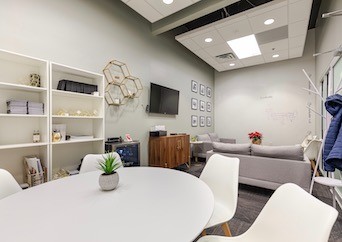
The environment feels polished and professional, which matters when you’re meeting with clients or conducting interviews. But unlike a traditional office lease, you’re not responsible for maintaining any of it. No coordinating with building management. No furniture purchases. No IT setup.
The Financial Case for Flexibility
When comparing costs between traditional commercial real estate and flexible workspace, the math often favors flexibility for small to mid-sized businesses.
Consider what a conventional lease requires:
- Security deposit (often several months of rent)
- Build-out costs for customizing the space
- Furniture and equipment purchases
- IT infrastructure setup
- Ongoing CAM fees and property expenses
- Multi-year commitment regardless of changing needs
Flexible workspace eliminates most of these costs entirely. Move-in ready offices require no build-out. Furniture is included. Technology infrastructure exists from day one. And month-to-month terms mean you’re never paying for space you’ve outgrown or no longer need.
For a tenant evaluating options, the total cost of occupancy often favors flexible solutions even when the per-square-foot rate appears higher at first glance.
Finding the Right Fit for Your Business
The shift toward flexible workspace doesn’t mean traditional leases have become obsolete. Large organizations with stable headcounts and long planning horizons may still benefit from conventional commercial space. But for growing companies, small businesses, distributed teams, and organizations navigating uncertainty, flexible options provide something that traditional real estate cannot: the ability to adapt.
The question isn’t whether flexible workspace is “better” than traditional leases. It’s whether your business needs match what each option provides. For many, the answer has become clear.
About Roam
Roam serves corporations and remote business professionals with flexible workspace across Metro Atlanta, Dallas, and Greenville. With 10 locations strategically positioned in key business markets, Roam offers coworking memberships, private offices, and meeting rooms designed to support how modern businesses actually work.
Our hospitality-first approach means every detail is considered, from purposefully crafted workspaces to dedicated meeting coordinators who handle logistics so you can focus on what matters. Month-to-month flexibility, all-inclusive pricing, and professional amenities make Roam the smart alternative to traditional commercial leases.Ready to explore your options? Visit Roam to schedule a tour or learn more about membership plans that fit your business needs. Start, grow, and scale your business at Roam.